He built a car scanner app in ten minutes. The plug is the part worth knowing about.
A YouTuber had an AI write him a gauge-and-code reader from the couch. A used-car buyer can learn something from the cheap plug it talks to.
Rob, who runs the YouTube channel Rob FilmedIt, posted a video on November 9 with a simple pitch. He asked Claude, an AI model, to write him a phone app that reads his car's computer: live gauges, trouble codes, a way to clear them, data logs and a horsepower estimate.
"I actually built this app last night laying on the couch in about 10 minutes."
It didn't work on the first try. His cheap ELM327 adapter wouldn't connect, so he switched to an iCar Pro adapter, about $50 by his count, and that one did. The gauges came up, and the app put his car at about 201 horsepower and 190 of torque.
"No idea how accurate some of that stuff is, but yeah, that's pretty awesome."
That's an honest disclaimer and a fair one. A horsepower number worked out on a phone from sensor data is an estimate, not a dyno run. The more useful part of the video is the plug.
The port your car already has
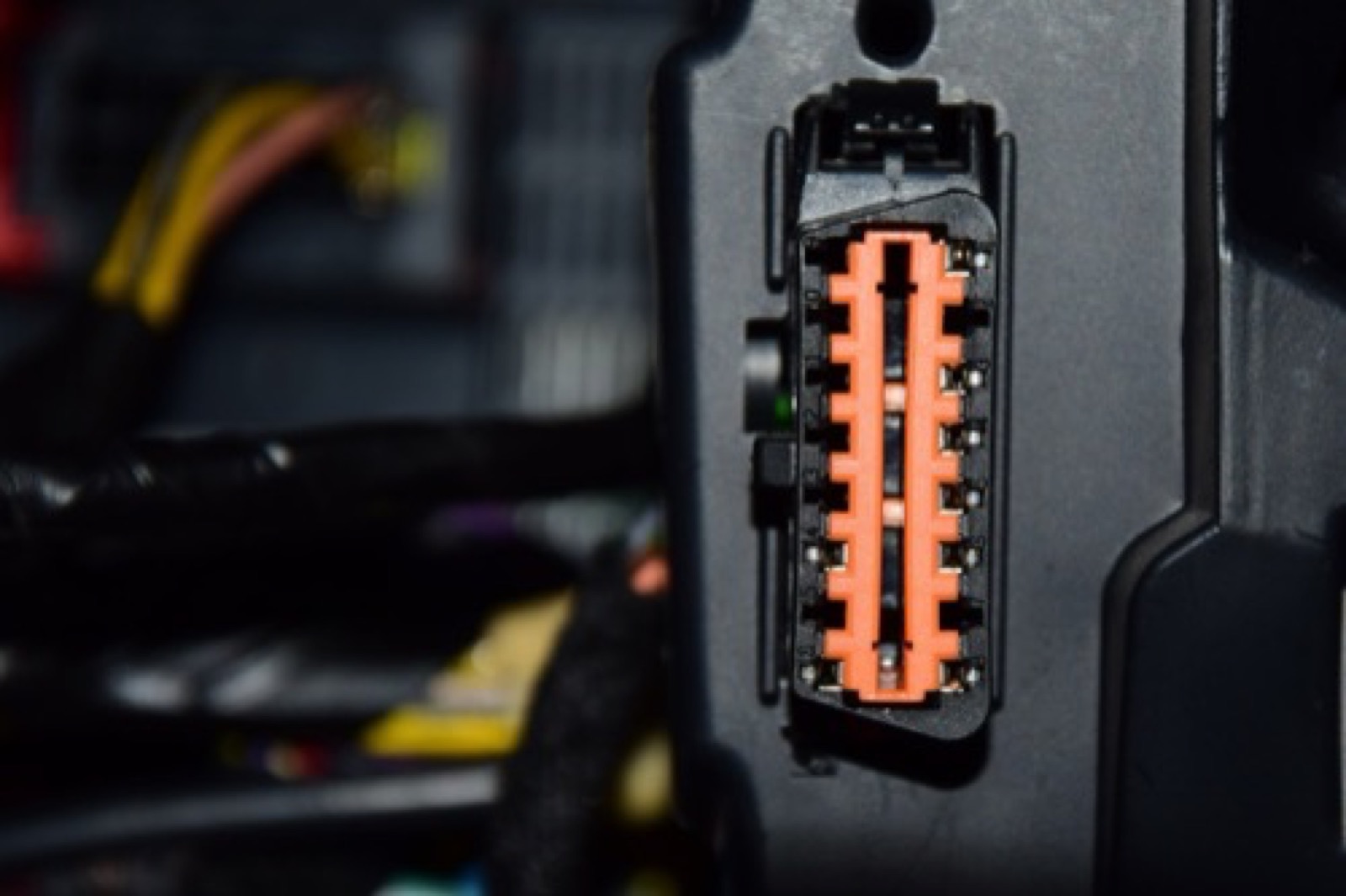
The adapter goes into the car's OBD-II port, usually under the dashboard near the steering column. EPA describes the on-board diagnostic system as "found on 1996 and newer vehicles." Through that port, the car's computer reports stored trouble codes and the status of its emissions self-tests, which inspectors call readiness monitors.
Why a buyer cares
Clearing the codes turns off the check-engine light. It doesn't fix whatever turned it on. The Texas Department of Public Safety puts it plainly:
"If you've cleared the DTCs (using a scan tool or disconnecting the battery), monitors will reset to 'Not Ready'."
The car then has to be driven before the monitors finish their checks again. So a car that shows several monitors "Not Ready," with the check-engine light off, may have had its codes cleared recently.
That isn't proof of anything. Texas says the most common reason for "Not Ready" monitors is a disconnected battery: a dead-battery replacement, a tune-up or a new car stereo can do it. It's a reason to ask a question, not to walk away.
It matters for inspections too. In Texas, a 2001-or-newer car with two or more monitors "Not Ready" fails the emissions test, and a 1996–2000 car fails with three or more. Other states set their own limits.
Rob's app wasn't really the point, and he'd probably tell you so himself. The car has been keeping notes the whole time. A cheap plug lets you read them.
Sources
- Rob FilmedIt, "I Built an OBD2 Scanner App With Claude AI," YouTube, Nov 9, 2026. The quotes are his words, transcribed.
- Texas Department of Public Safety, "Ready or Not: Setting the record straight on readiness monitors and OBDII inspections"
- U.S. EPA, Vehicle Emissions On-Board Diagnostics (OBD), archived page: "the onboard diagnostic (OBD) system found on 1996 and newer vehicles"